
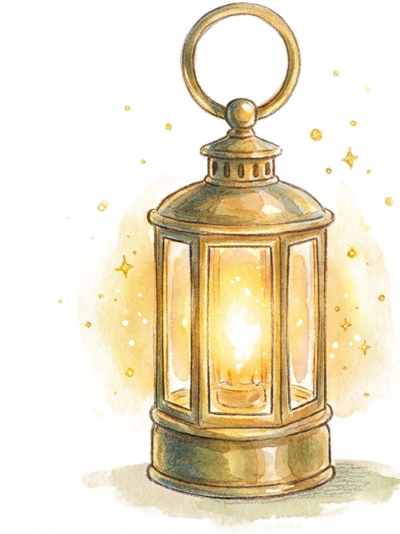
The Lantern
and the Promise
The whole story, bumps and all
Written by Michelle Cho and Jorge Ledezma,
with Claude
with Claude
Pictures made with Google Gemini
Santa Margarita Catholic High School · 2026
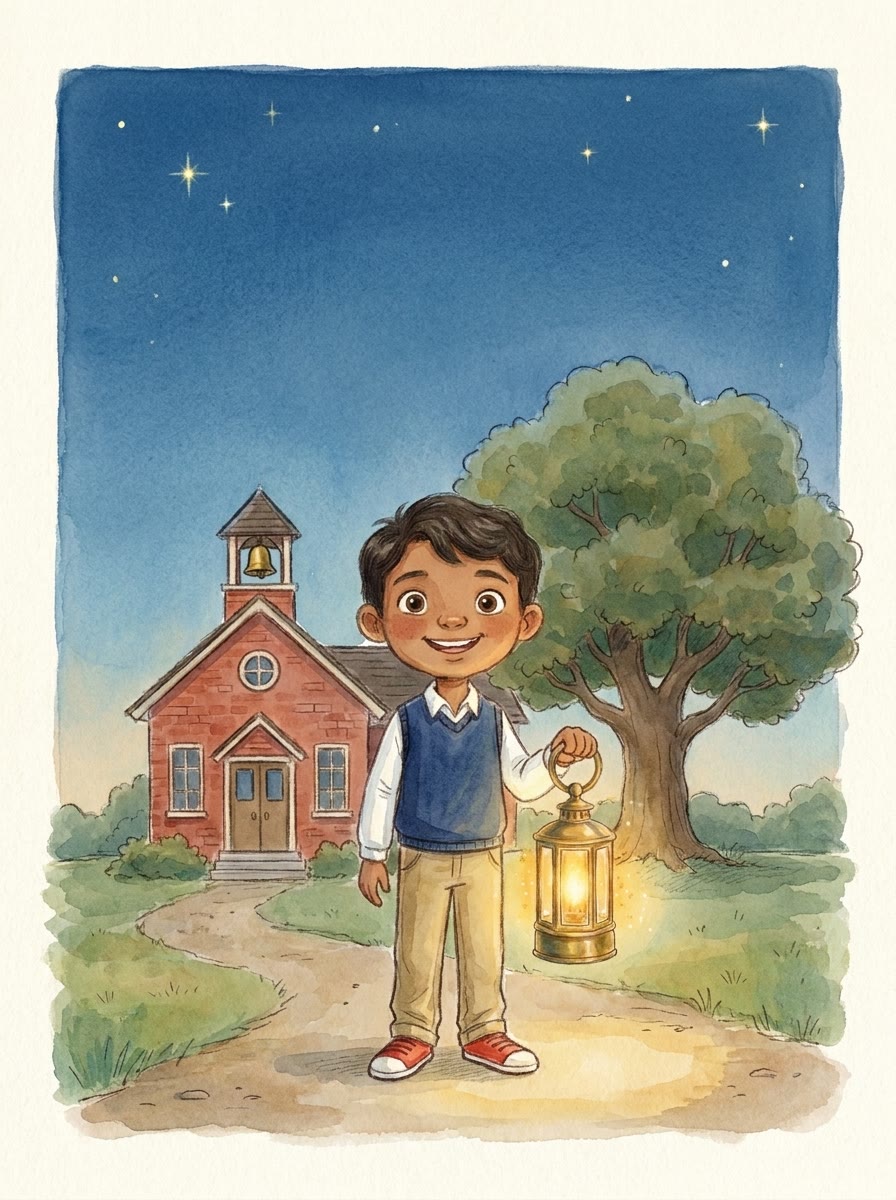
A fictional story. This story is based on SM’s journey with AI. St. Brigid School and everyone in it are made up. The bumps and the lessons are real.
Who did what. Michelle Cho and Jorge Ledezma chose the story, wrote the character sheets and picture descriptions, directed and approved every change, and checked the facts against SM’s documents. Claude, an AI model made by Anthropic, drafted and revised the words from our notes. Gemini, an AI image model made by Google, generated every picture; none were drawn by hand. When a picture was wrong, we asked for a new one.
Our AI use level: AI-Enhanced. Using SM’s faculty AI guidelines, we place this book at AI-Enhanced: part of the content was generated by AI, and we disclose it. The cover names Claude as a co-writer; in a formal citation, AI is cited as a tool, not an author.
We take responsibility. We are responsible for everything in this book, including the parts made with AI.
Cho, M., & Ledezma, J. (2026). The lantern and the promise: The whole story, bumps and all [Picture book]. Santa Margarita Catholic High School.
AI tools used are cited above, under Tools we used.
For every SM student
still learning to do the walking.
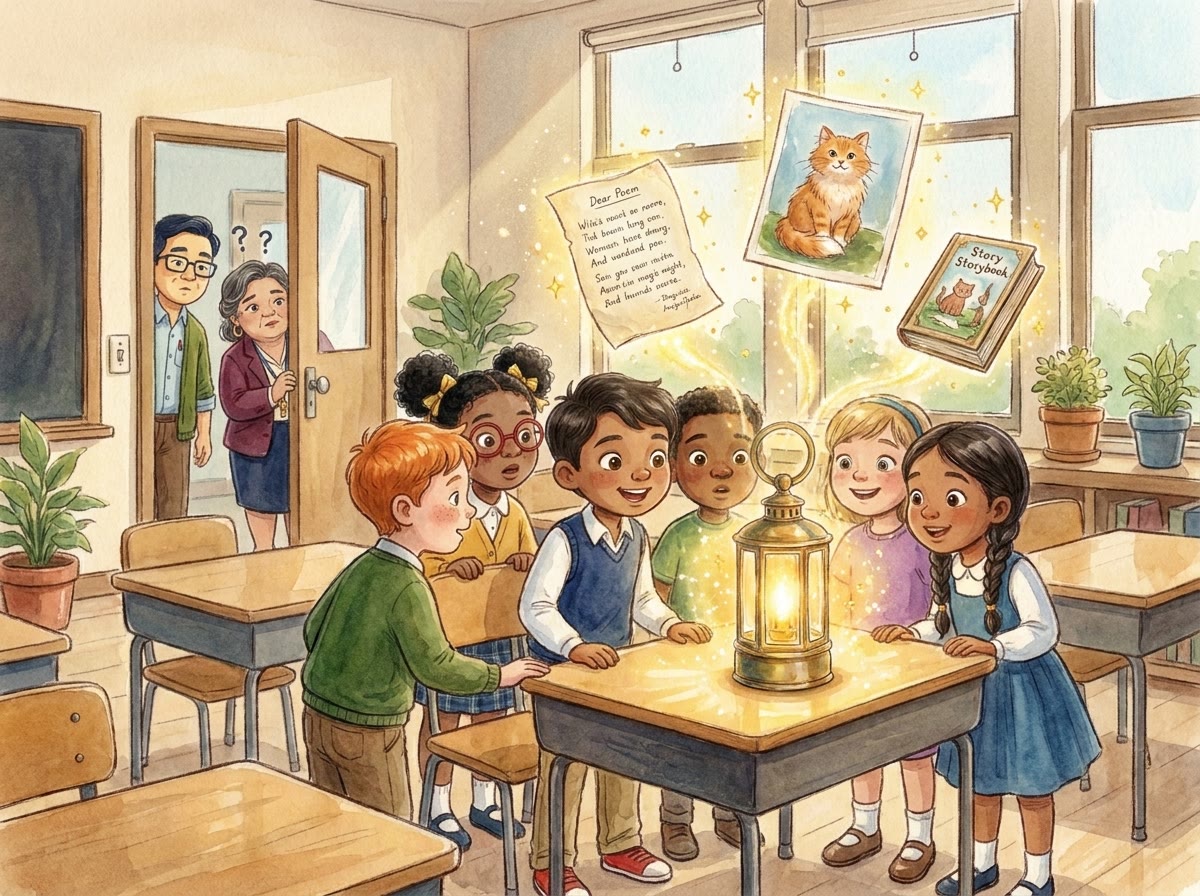
One day, a lantern came to St. Brigid School.
It glowed, and it could make things.
If you told it what you wanted, it made it.
A poem. A picture. A whole story!
The kids found out first.
The grown-ups did not know what to think.
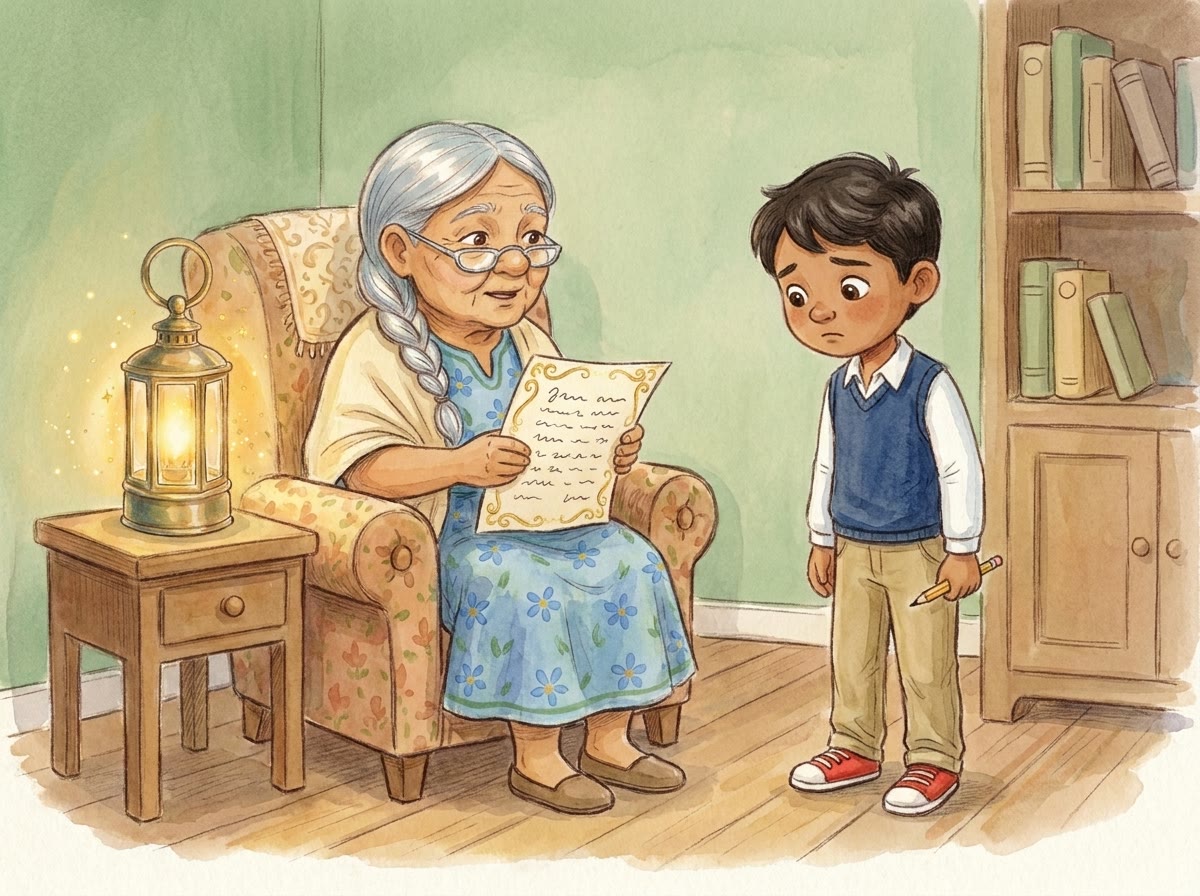
Miguel wanted to give his grandma a poem.
So he asked the lantern.
Whoosh! It wrote one, fast and fancy.
"Did you write this?" Grandma asked.
Miguel looked at his shoes. "The lantern did."
Grandma hugged him anyway.
But Miguel felt funny inside.
The words were pretty. They were not his words.
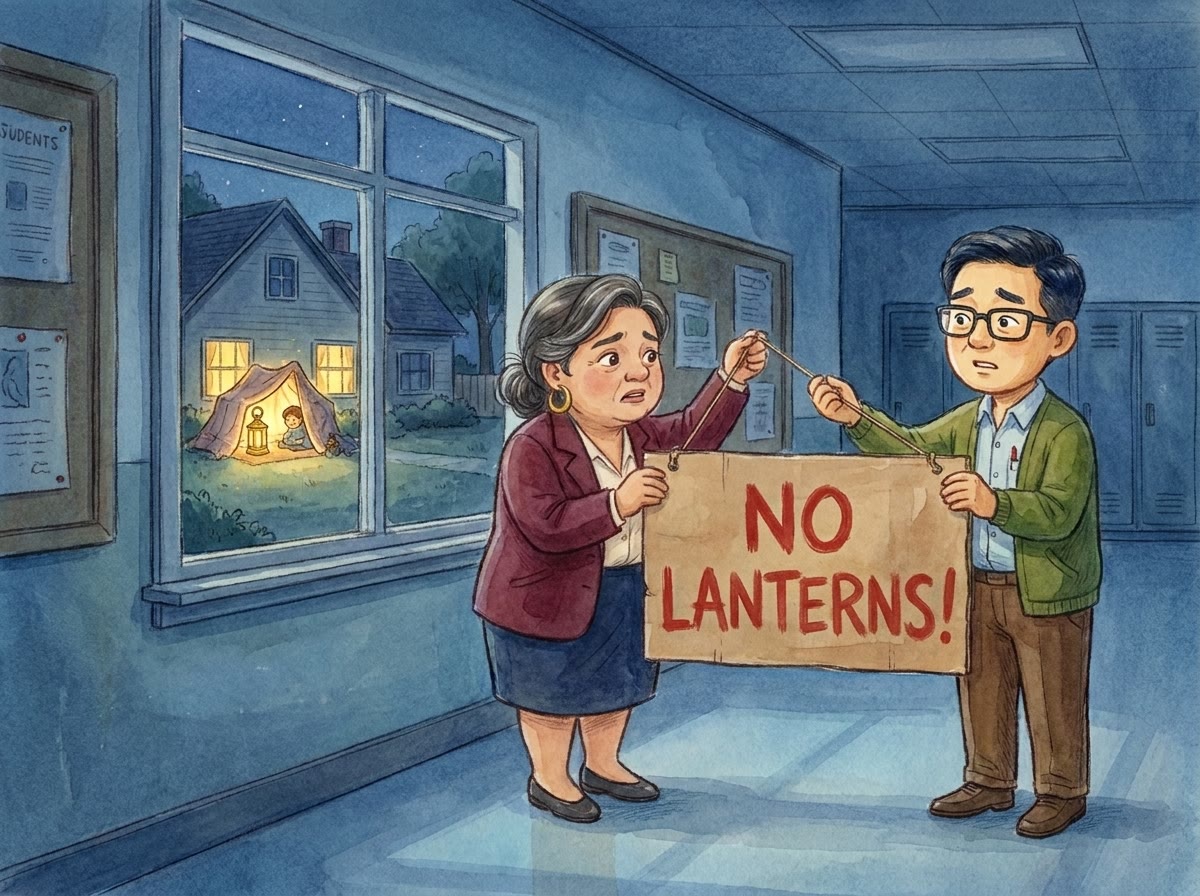
The grown-ups got worried.
They hung up a big sign: NO LANTERNS!
Then they waited to see what would happen.
But lanterns still glowed at home.
Nobody showed the kids how to use one well.
The sign said NO.
It did not say HOW.
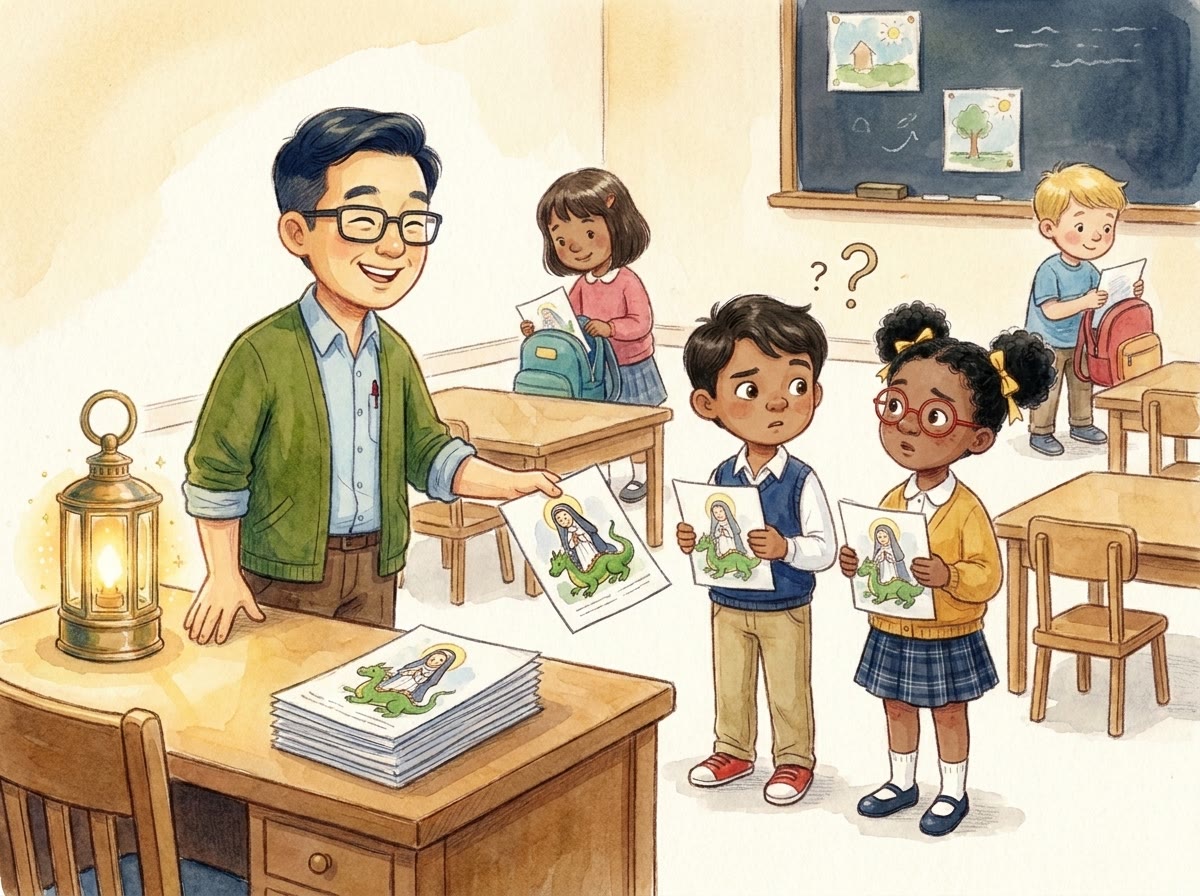
Some grown-ups trusted the lantern too much.
A teacher asked it for a worksheet about Saint Brigid.
It said she rode a dragon to school!
Nobody checked.
The worksheet went home in every backpack.
The lantern sounded smart.
But sometimes it made things up.
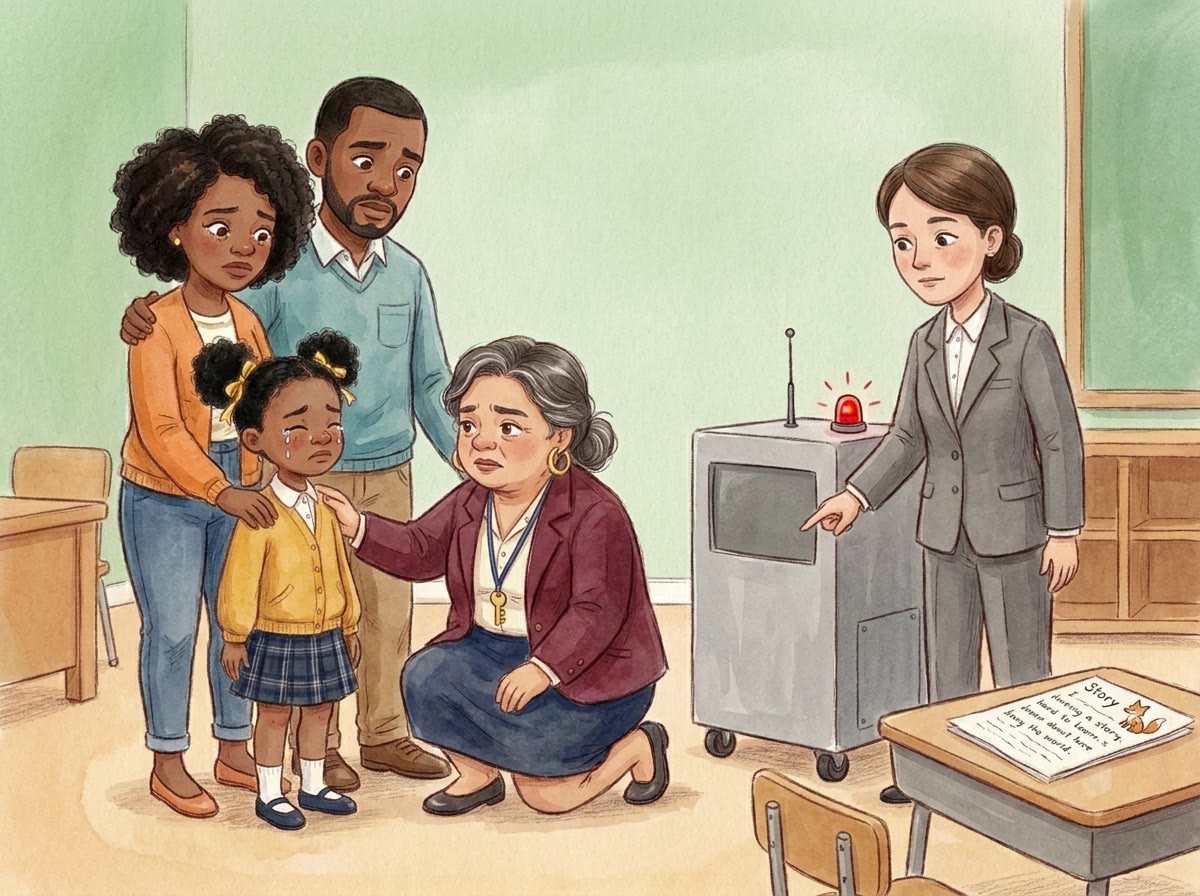
The school tried a machine called the Sniffer.
"It beeps when kids use the lantern," he said.
Beep! Beep! It beeped at Ava's story about a fox.
But Ava wrote that story herself!
Ava cried. Her mom and dad were upset.
"A beep is not the whole truth," said Mrs. Ortega, the principal.
But for a long time, the grown-ups spent more time catching than teaching.
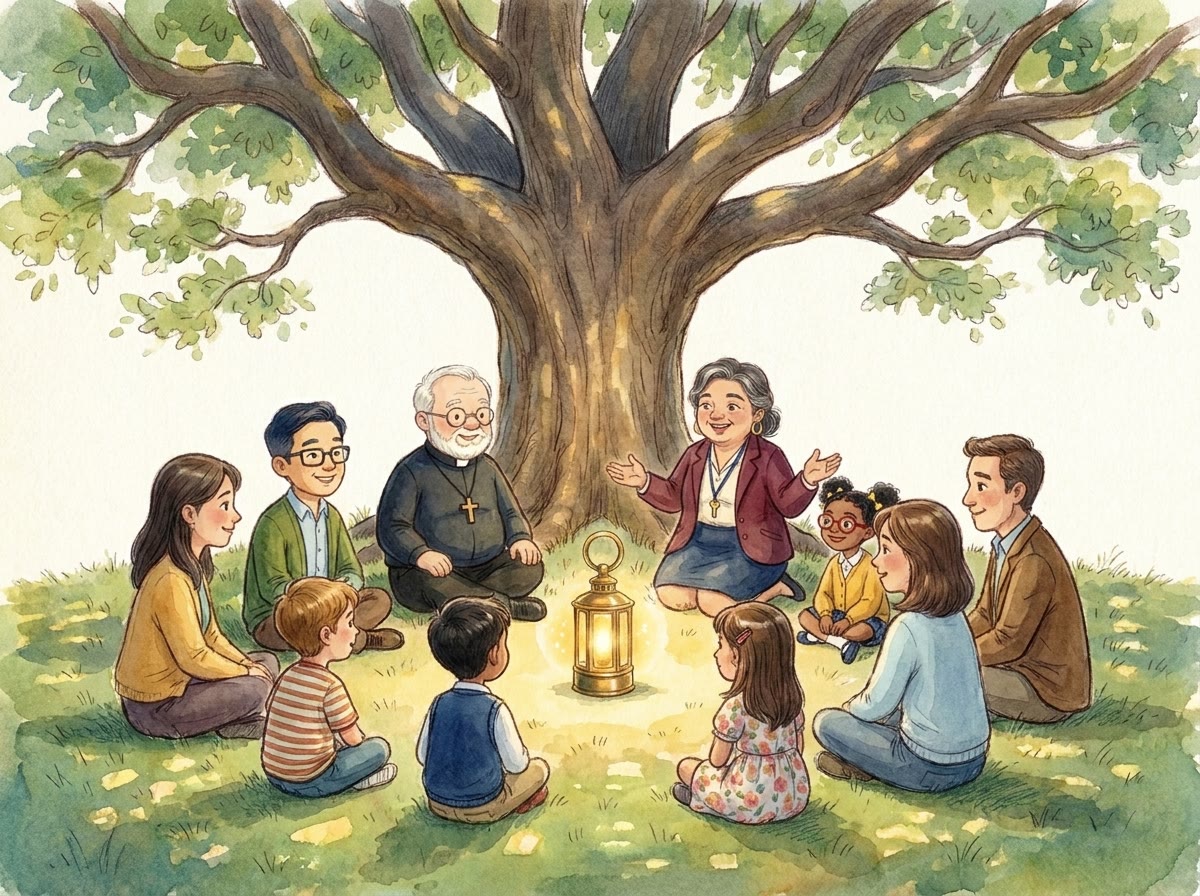
"I cannot fix this alone," said Mrs. Ortega.
So she asked for help.
Teachers, kids, moms, dads, and Father Tom sat in a circle under the big oak tree.
Everyone got a turn to talk.
"Let's stop saying NO," said Mrs. Ortega.
"Let's start learning to KNOW."
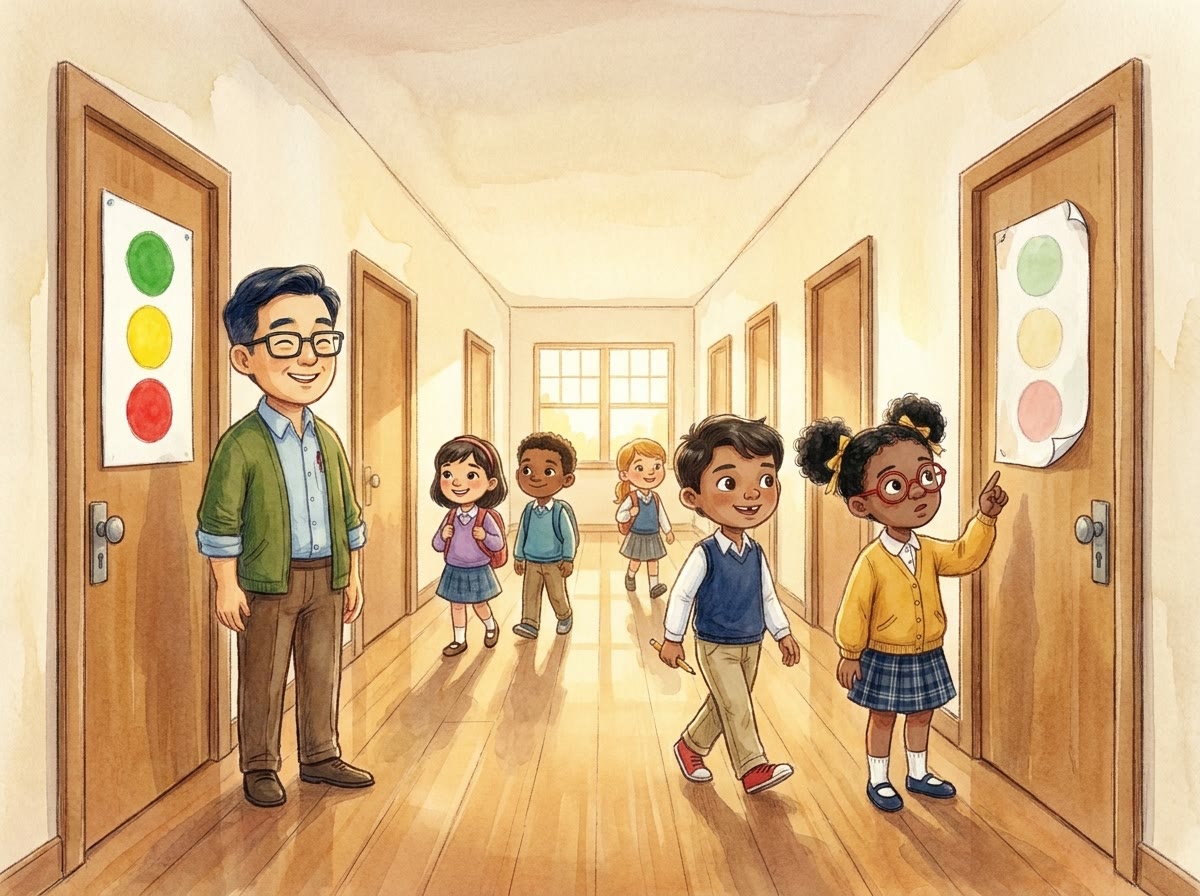
The Oak Table made a sign with three colors.
Green: the lantern can help. Yellow: ask first. Red: all yours.
Mr. Lee hung his sign by his door.
Most teachers did not.
Some hung it and never pointed to it again.
Soon the colors faded.
Kids walked right past.
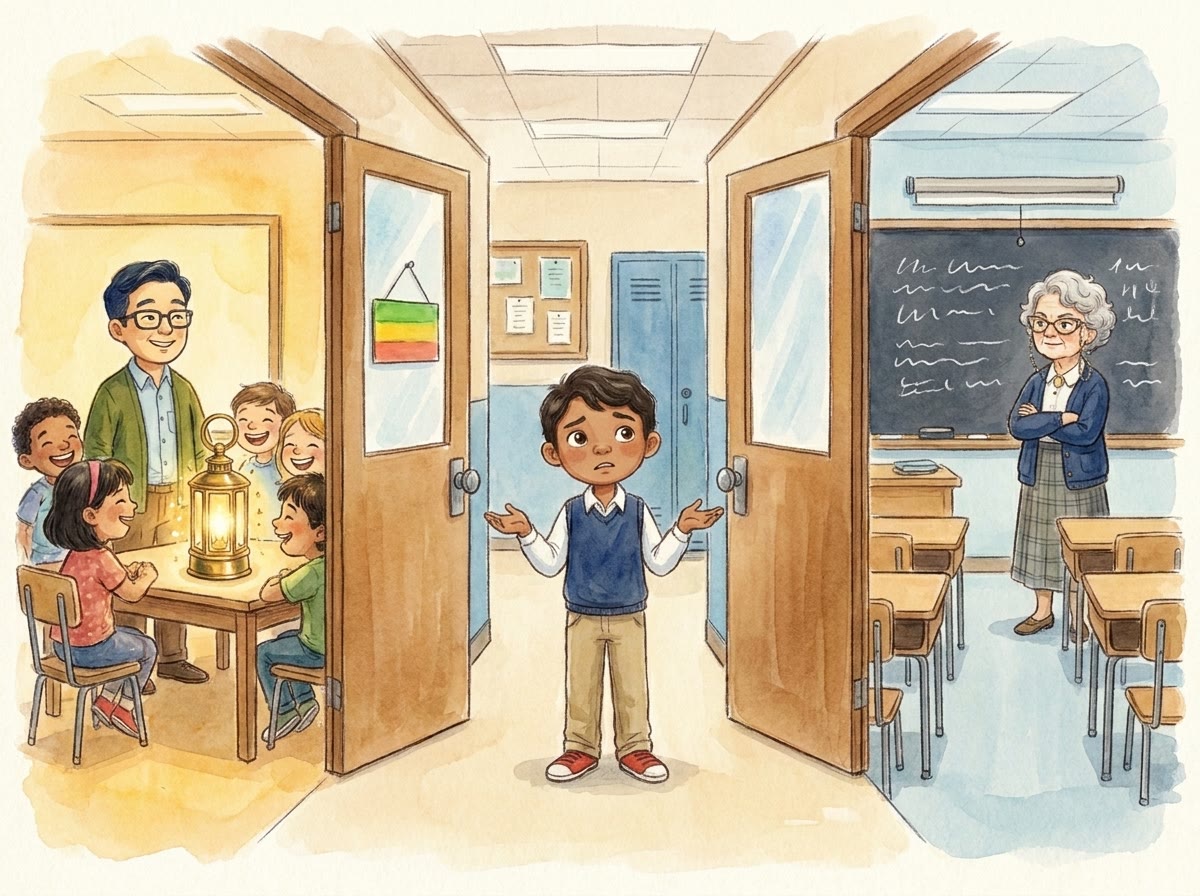
In Mr. Lee's room, the lantern could help, and he showed how.
Down the hall, Mrs. Hart's room had no sign.
"Is this green or red?" Miguel asked.
"In here, we do our own thinking," said Mrs. Hart.
In a third room, the sign said yellow: ask first.
But the teacher never said what to ask.
Same lantern. Same Miguel.
Different rules, and nobody said why.
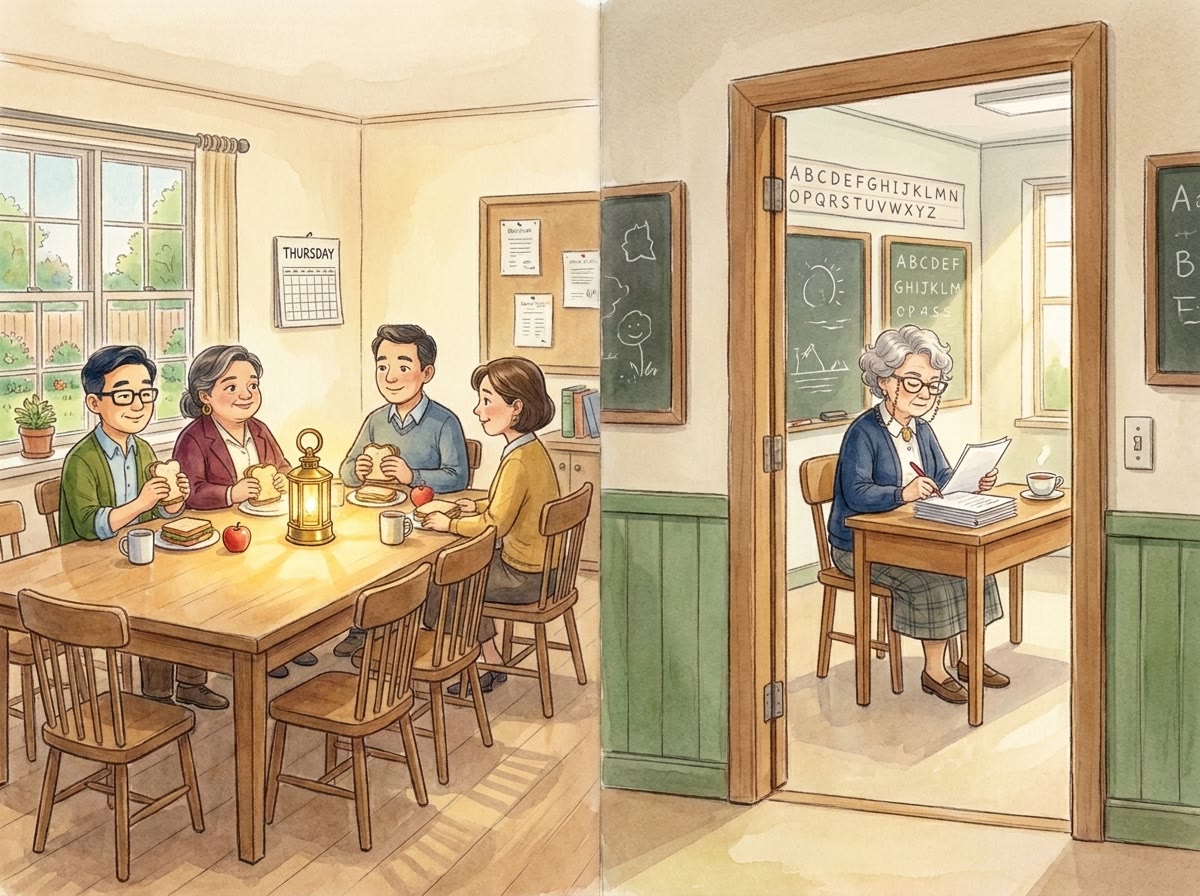
On Thursdays, there was Lunch and Learn.
Mr. Lee came every week. Some teachers came sometimes.
Some never came at all.
The teachers who came learned to check the lantern.
Mrs. Hart was a wonderful teacher, and a busy one.
"I have taught for thirty years without a lantern," she said.
She was not sure it belonged in her room.
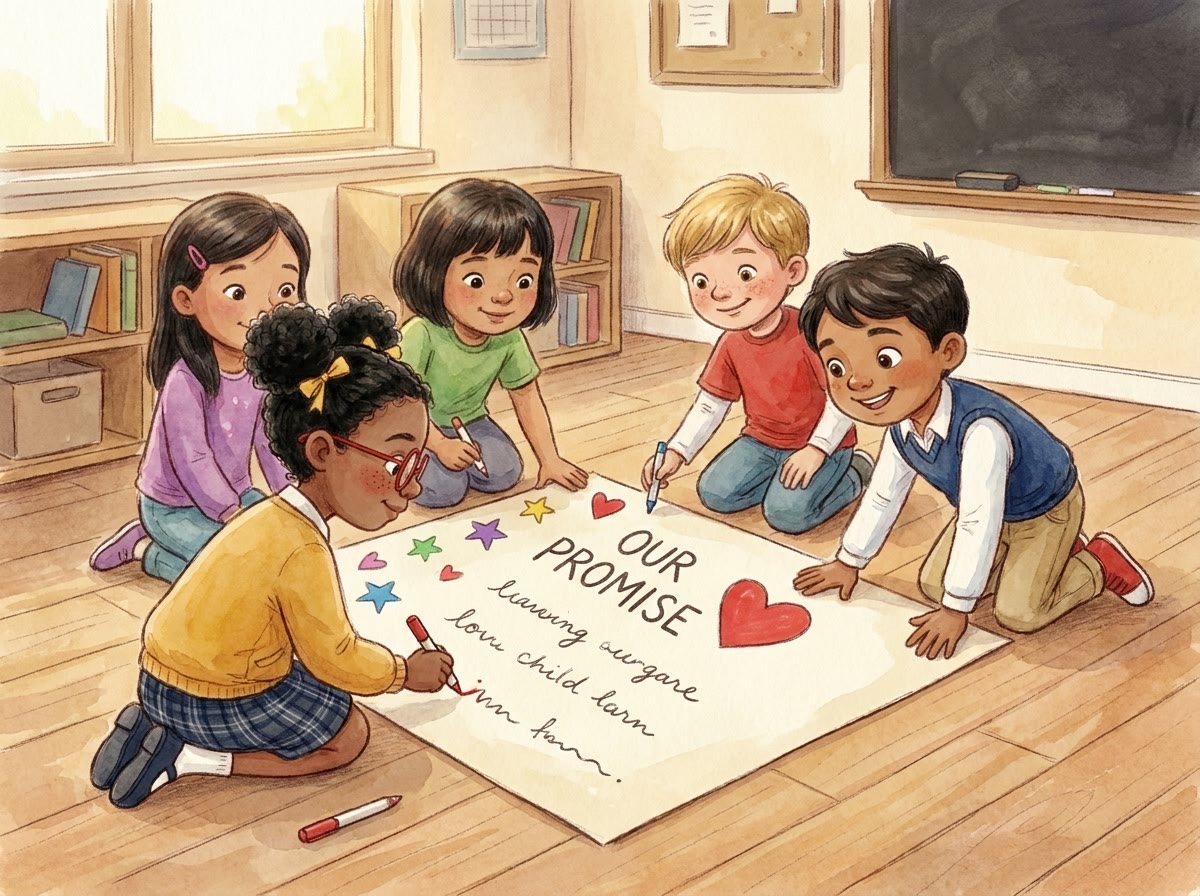
The kids had an idea of their own.
"Don't try to catch us," they said. "Trust us."
So they wrote a promise:
My work shows my own effort.
I follow my teacher's lantern rules.
I tell the truth about my helpers.
"Trust is the glue that holds us together," said Ava.
Promise Keepers helped everyone remember.
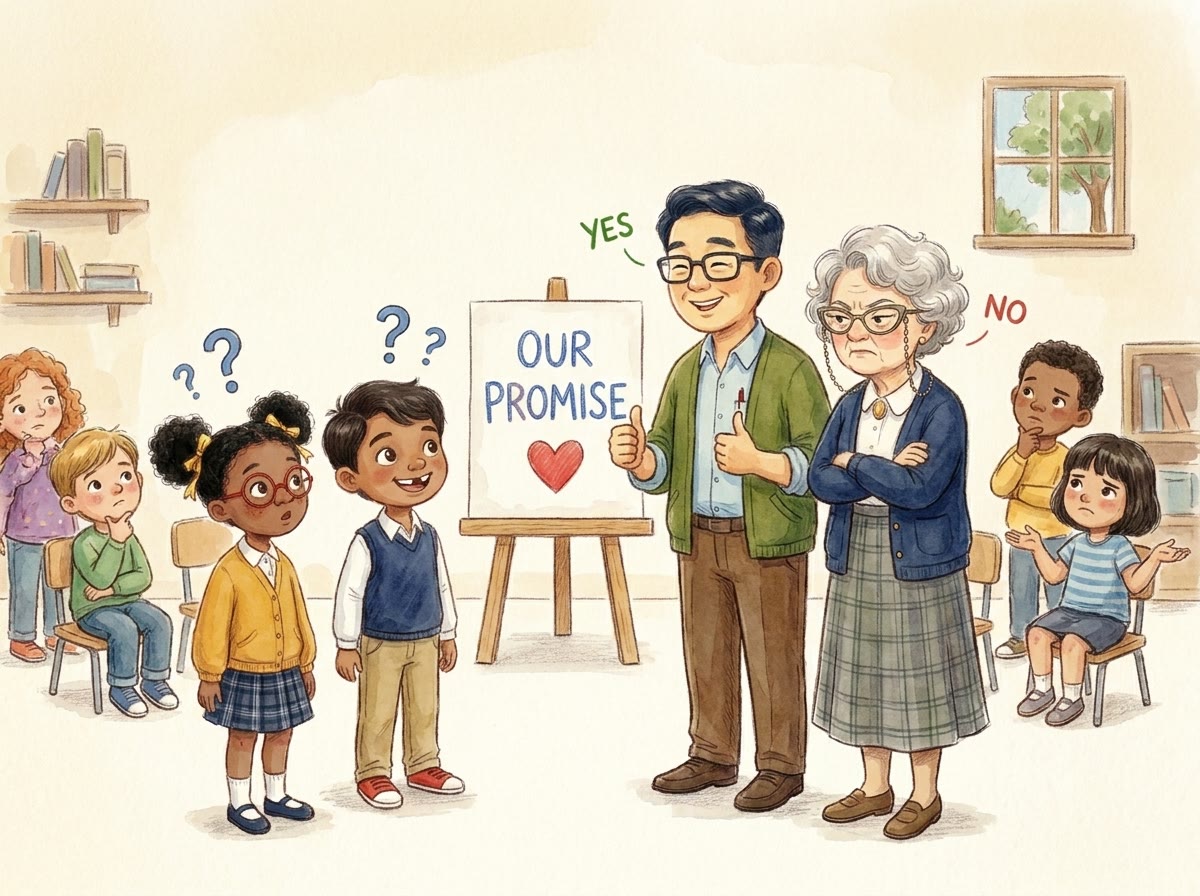
But nobody was sure what the promise meant.
"If the lantern fixes my spelling, is it still my work?" asked Ava.
"What if it gives me an idea?" asked Miguel.
One teacher said yes. One said no.
Some teachers talked about it. Some did not.
Some kids took the promise to heart.
Some kids just shrugged.
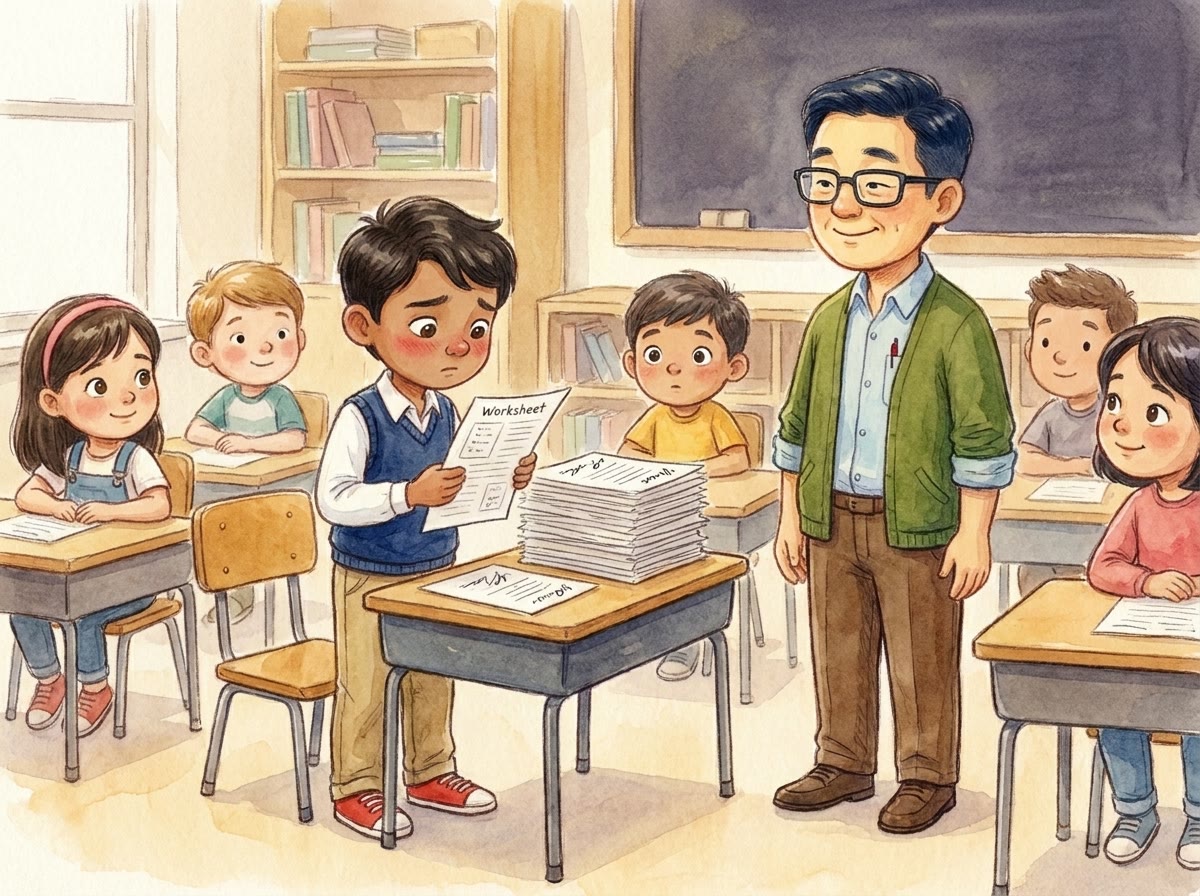
The promise went on every paper, every day.
Soon everyone signed it without reading it. Even Miguel.
Scribble, scribble, scribble.
The Promise Keepers stopped meeting.
"Read it out loud, Miguel," said Mr. Lee.
Miguel read it slowly. His cheeks got warm.
A promise only counts if you mean it.
They were still learning to mean it.
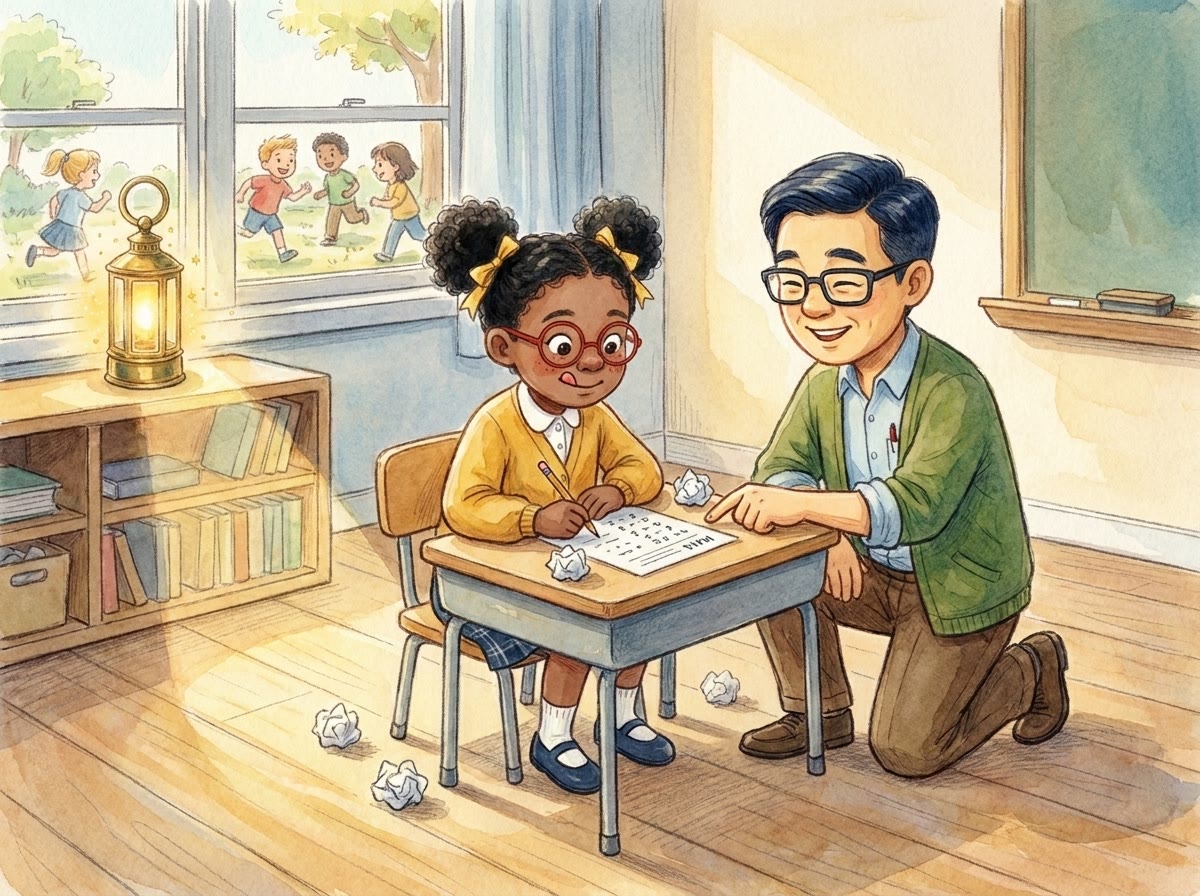
One day Ava crossed her arms.
"Just tell me what to write!"
Mr. Lee knelt down beside her.
He did not give her the answer.
"The hard part is where your brain grows," he said.
"The lantern can light the path. But your feet have to walk it."
Some days Ava got it all by herself.
Some days she gave up.
Learning is slower than just finishing.
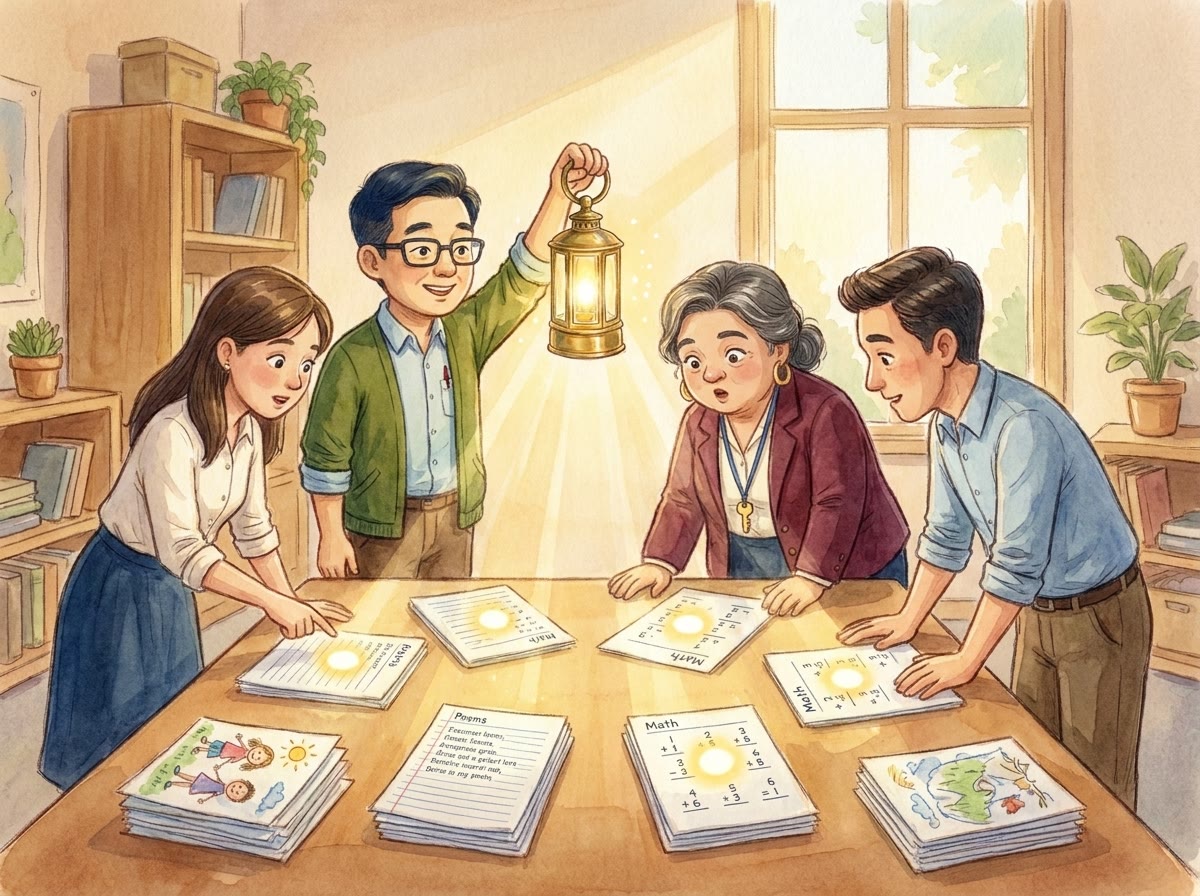
After school, a few teachers spread the kids' work across one big table.
They held up the lantern, and its light helped them see.
Five kids were stuck on the same step!
The next day, Mr. Lee taught that step a new way.
Not every teacher came to the table.
But the ones who did helped a lot of kids.
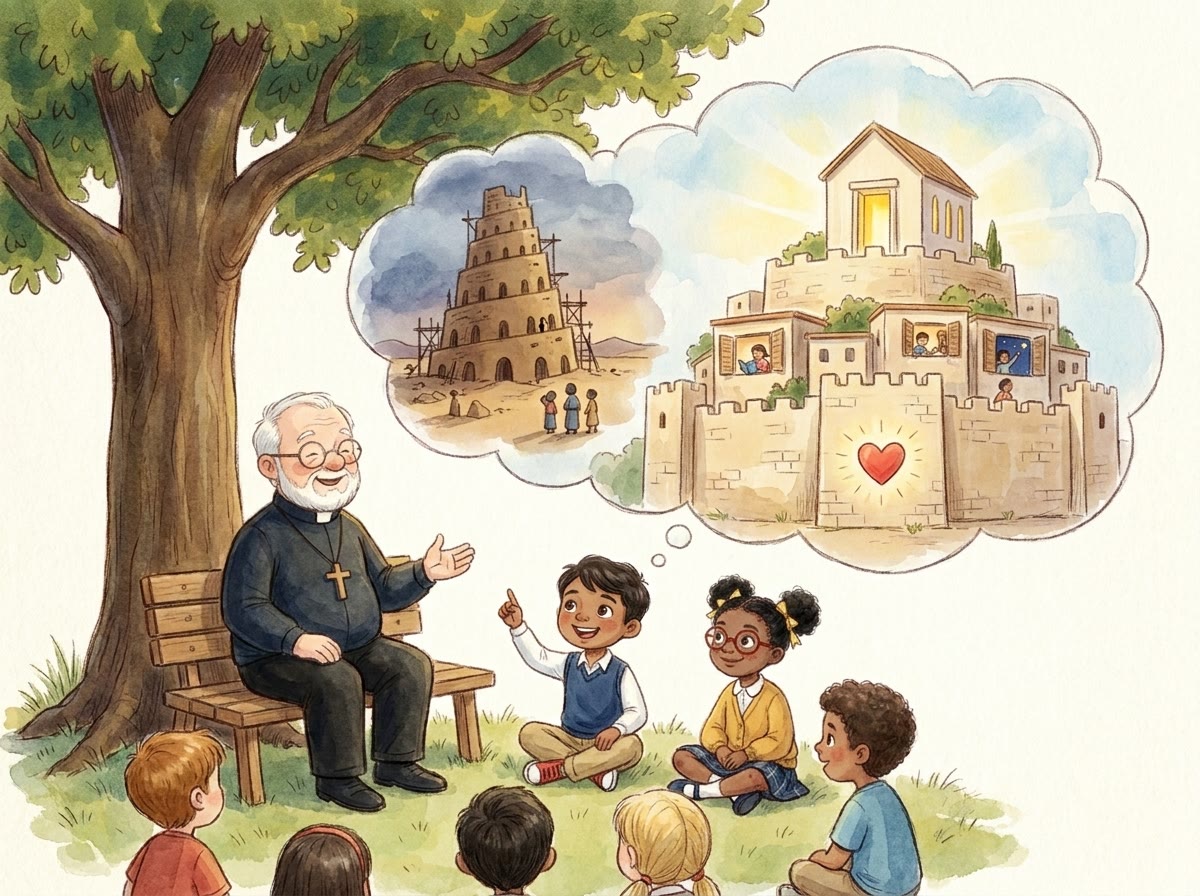
Father Tom told a story from the Bible.
"Long ago, people built a tall tower to make a big name for themselves.
They stopped understanding each other, and they never finished it.
But God's people build a city together, where God is at home with us.
Here, we build that city in each of you.
We grow the whole you: your heart, your mind, and your soul.
Your heart is the ground. Without it, nothing else can stand.
A lantern can build a tower fast. It cannot grow a person."
"Let's build the city," said Miguel.
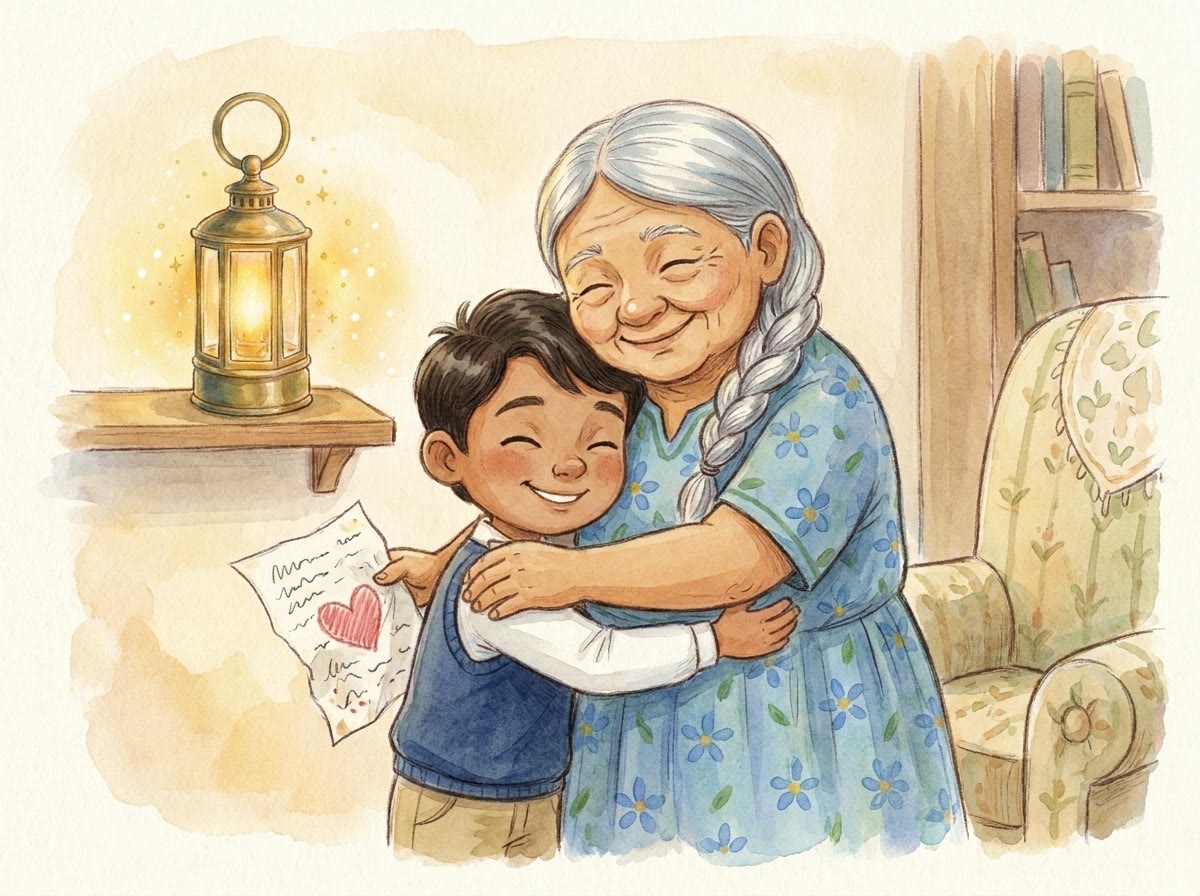
Miguel wrote a new poem for Grandma.
It was short. It was a little messy.
And every word was his.
Grandma read it twice. Then she hugged him tight.
The next day, Miguel read the promise before he signed it.
This time, he meant it.
On the shelf, the lantern glowed softly.
It was a helper, not the boss.
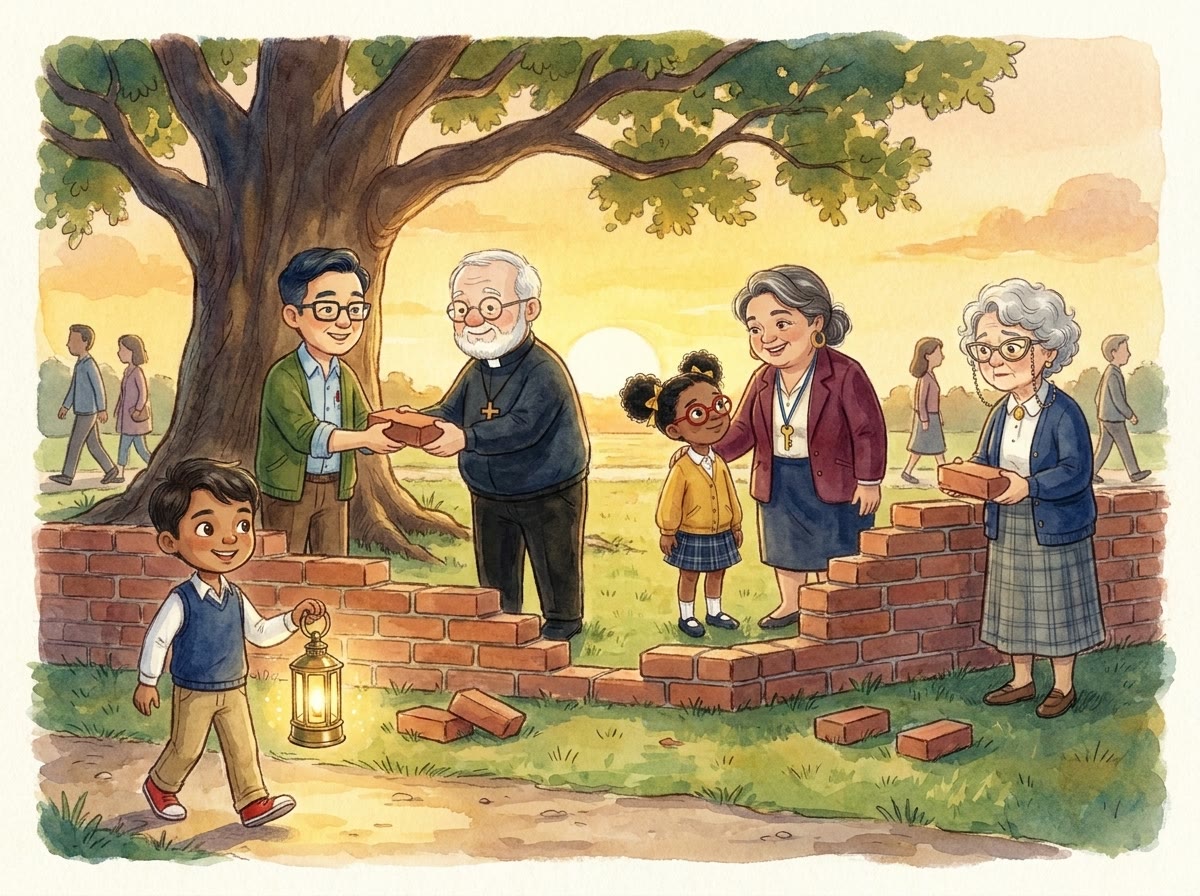
Some doors still have no sign.
Mrs. Hart still teaches her way.
Some kids still scribble the promise.
Some teachers still skip lunch on Thursdays.
"Are we done?" asked Ava.
"Not even close," said Mrs. Ortega. "We are still building."
The lantern can light the way.
But everyone has to do the walking.

| The lantern | Generative AI tools (ChatGPT arrived November 2022; students knew before staff) |
|---|---|
| The big NO sign, the waiting | The first AI policy (March 2023): banned unless explicitly allowed; a lot of "let's wait and see"; students got no guidance or clarity |
| The dragon worksheet | "Magical AI thinking": hallucinations went unchecked; teachers reported false sources, quotes and resources |
| The Sniffer | AI detection tools the school tried (Turnitin, CopyLeaks) became the focus over guidance; teachers acted as monitors more than mentors; parent concerns about accuracy led the school to rely on it less |
| The Oak Table | The Innovation Taskforce: administrators, teachers, students and parents. "We moved from NO to KNOW" |
| The faded signs | The stoplight framework: adopted, but hardly used; most teachers did not embrace it |
| Two rooms | A fragmented faculty: the same student meets different AI expectations in every class |
| Lunch and Learn | AI Thursday, Lunch and Learns, Tech Mentors: a few regulars; some teachers never came |
| The promise | The student-adopted Honor Code Pledge (January 2026) and Honor Reps; the Honor Code is one of the "first steps" on the path to human formation |
| What counts? | Confusion about what the pledge means with AI, and uneven buy-in among teachers and students |
| Just a scribble | A pledge on every assignment turning performative |
| "The hard part" | Productive struggle instead of "doing school" |
| The lantern's best job | The PLC portal: teachers using AI to look at student work together and respond as a community; not every teacher took part |
| Two ways to build | Pope Leo XIV, Magnifica Humanitas (2026): "constructing Babel or rebuilding Jerusalem" (Genesis 11; Revelation 21) |
| Heart, mind and soul | SM's whole-person formation, "Forming the Whole Human Person to live out Caritas Christi": human, intellectual and spiritual formation build on one another; "Without a solid human formation, a student's intellectual and spiritual growth can be hindered" |
| Still building | Our AI journey is still unfolding |
A fictional story based on SM’s journey with AI, by Michelle Cho, Jorge Ledezma & Claude; pictures by Gemini. See “How we made this book” at the front for how AI was used and how to cite it.